Trying more materials
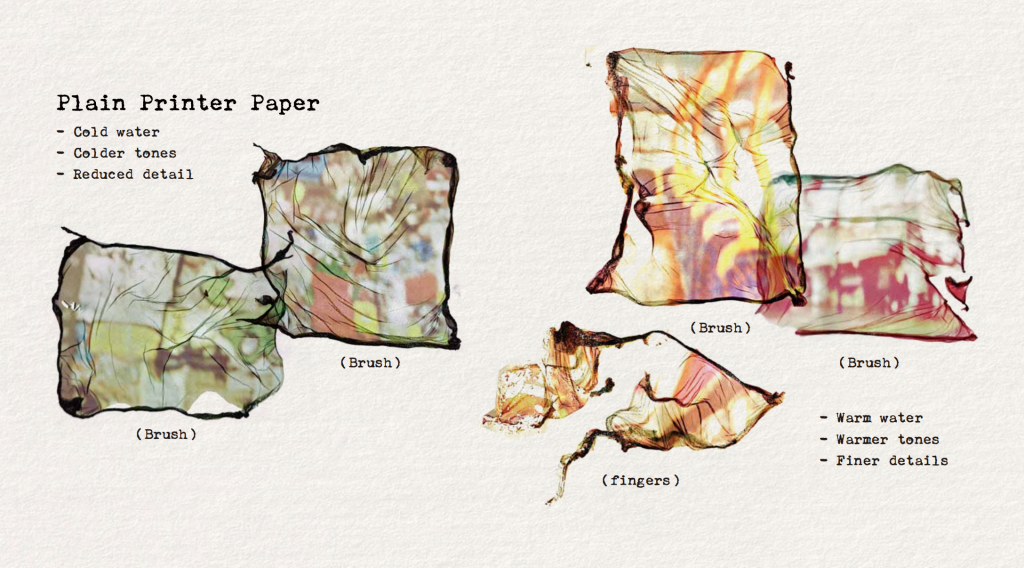
I started by comparing different water temperatures, soaking times and tools when transferring Polaroid images onto ordinary printer paper. I recorded how long each experiment took and how difficult it was to handle the image. I also observed how these factors affected the original Polaroid, including any damage during the process, and how they changed the colours, details, wrinkles and overall results of the transfer.
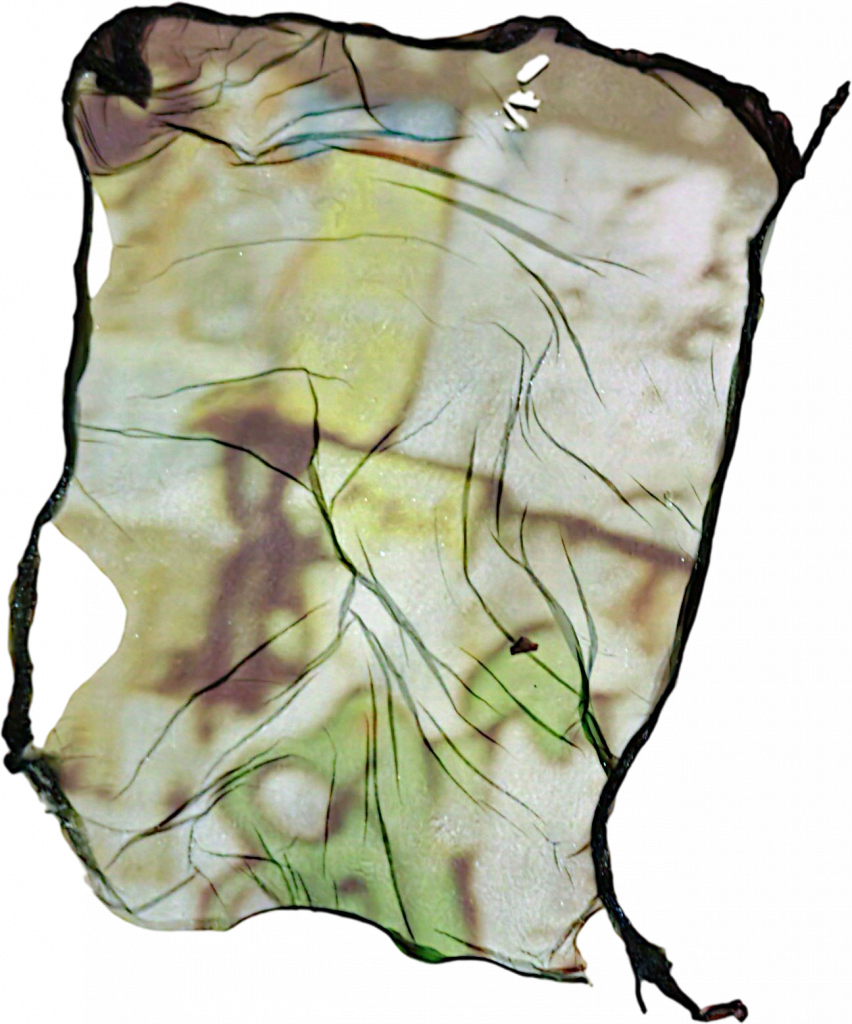
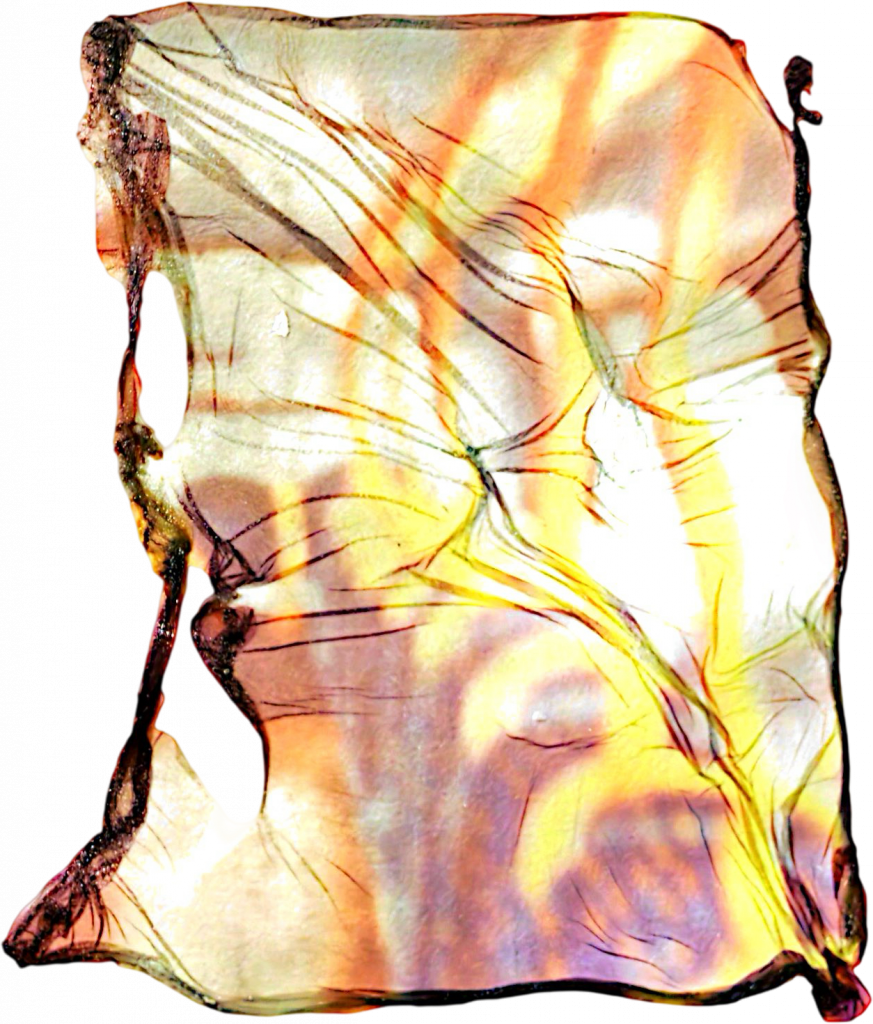
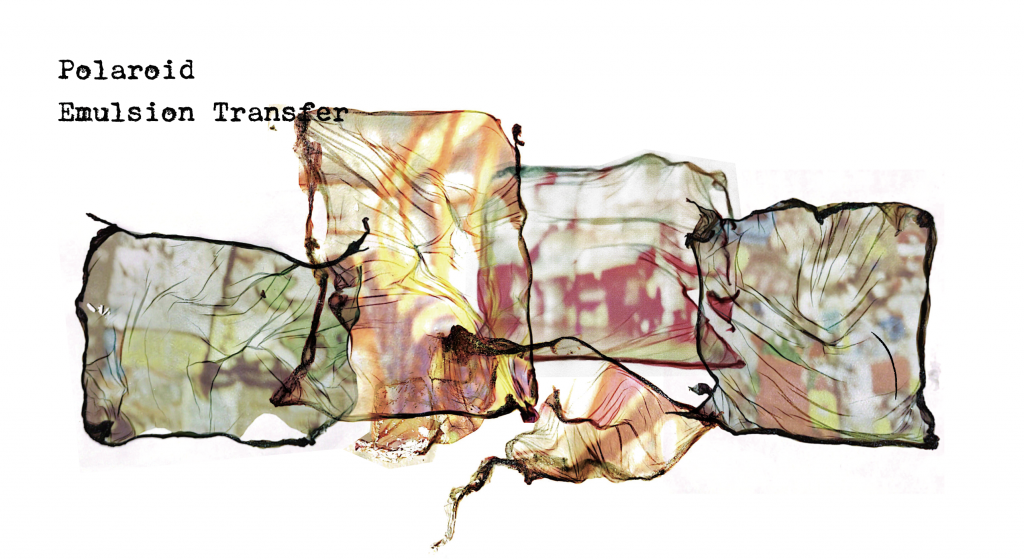
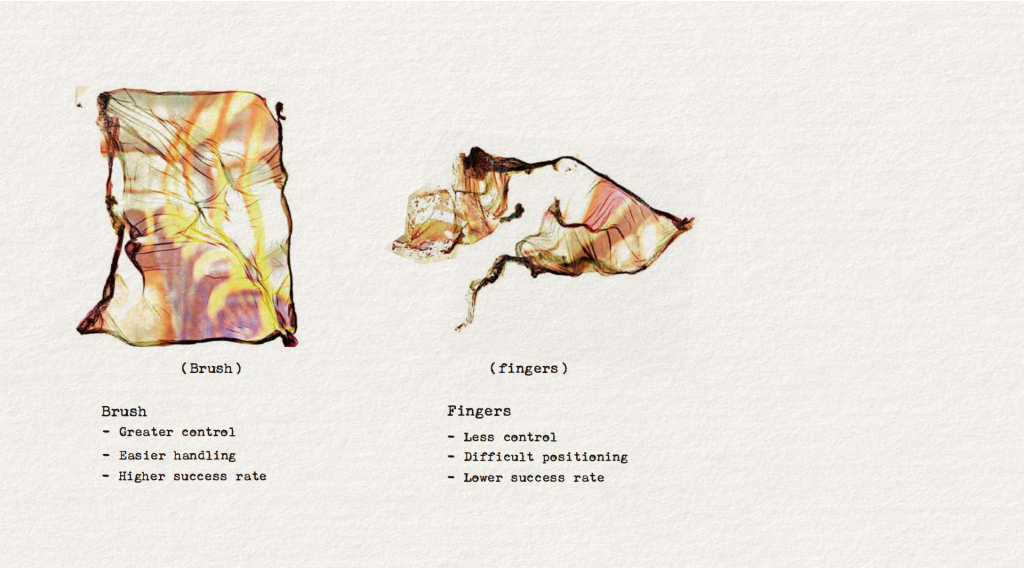
I learned that small changes in water temperature, soaking time and tools could make a big difference to the final result. Warm water made the image layer easier and faster to separate, but it could also affect the colours and details. Using a brush gave me more control than using my fingers and made the transfer easier. I realised that even when I followed the same steps, I couldn’t always predict the result.
Water temperature & Tools
Cold Water
- Cooler tones
- Reduced detail
- Image remained relatively intact
Warm Water
- Warmer tones
- Finer details
- Faster separation of the image layer
Brush
- Greater control
- Easier to spread the image
- Less damage
Fingers
- Difficult to position the image
- Less control
- More folds and tears
Glass
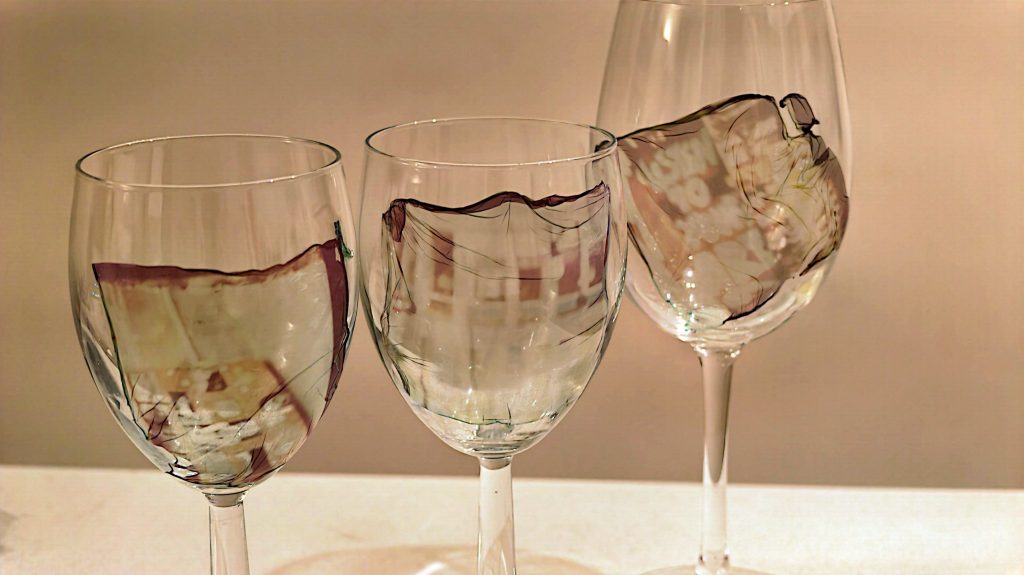
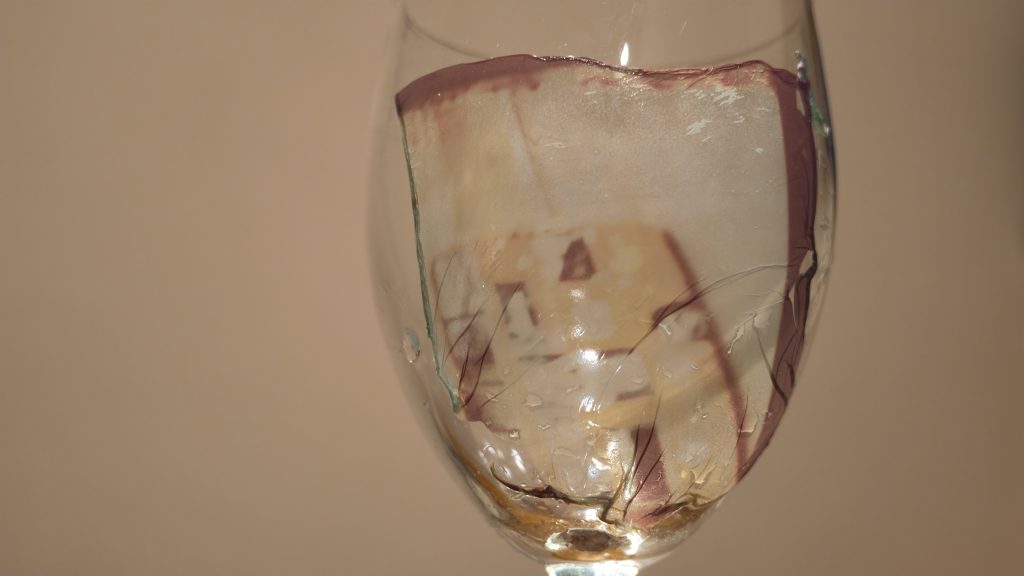
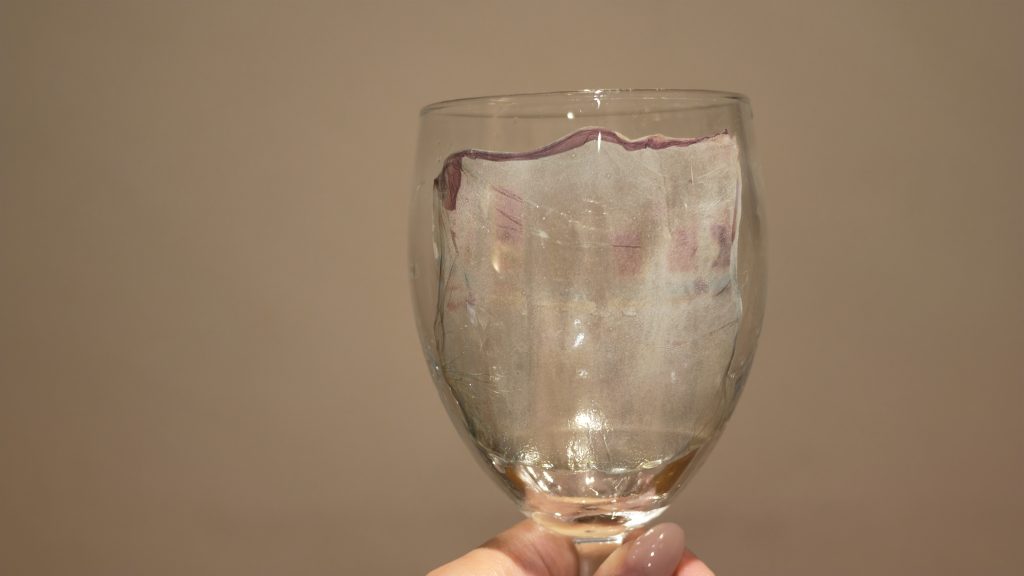
- The image attached to the glass surface more successfully than to fabric.
- The glass remained transparent, allowing the image to be seen through it.
- The curved surface caused the image to fold and wrinkle.
- The image changed shape as it followed the curve of the glass.
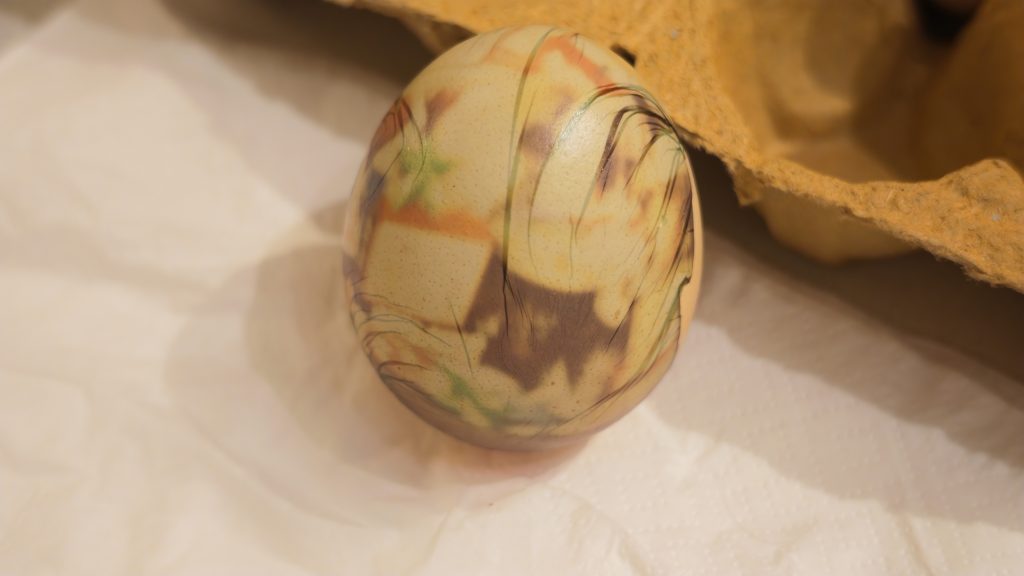
Eggshell
- Folds and overlaps follow the shape of the eggshell.
- Image wraps around the curved surface.
- Colours and details remain visible.
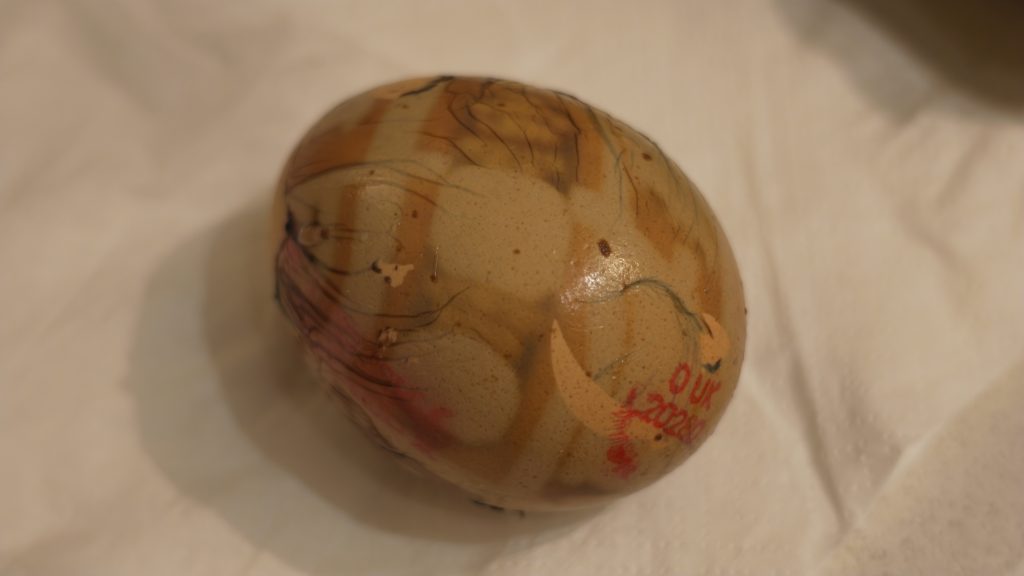
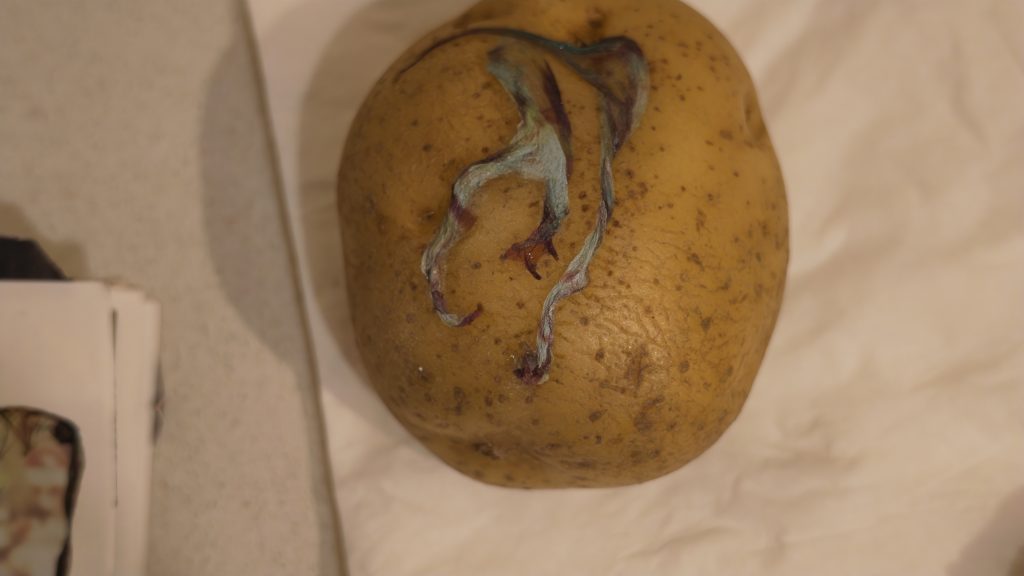
Potato
- Image breaks into smaller fragments.
- Only a small part remains attached.
- The original photograph becomes difficult to recognise.
Leave a Reply