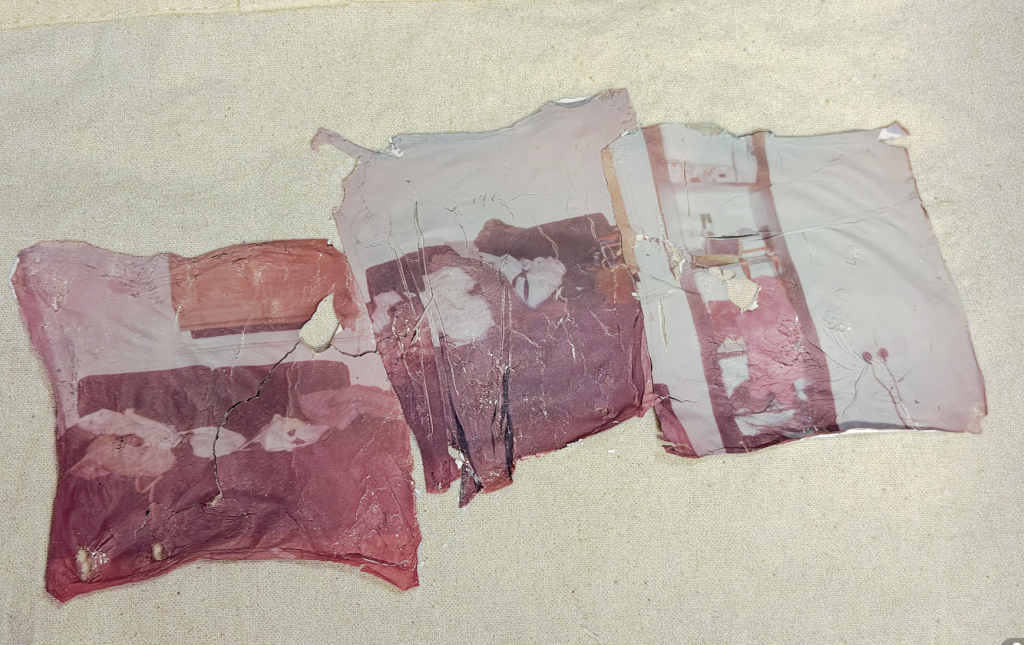

About copy
I knew from the beginning that I couldn’t recreate exactly the same image as Rhiannon Adam’s work. Each Polaroid captures a different moment, with its own lighting and exposure. So instead of copying the final image, I decided to try copying her method.
I found a step-by-step tutorial for Polaroid emulsion lifting on the Museum of Latin American Art (MOLAA) website and followed the instructions. I managed to separate the image layer from the Polaroid, but transferring it onto fabric didn’t work as I expected. The emulsion didn’t attach well to the fabric, and after drying, it started to crack and break apart. Although I followed a similar process, I couldn’t achieve the same result. This made me realise that using the same method doesn’t necessarily mean producing the same image.
https://molaa.org/resource-type/2024/5/28/polaroid-emulsion-lift?utm_source=chatgpt.com
First Copy Attempt

Cut
I started by cutting off the white borders of the Polaroid to prepare for separating the image layer.

Peel
I carefully peeled away the transparent plastic layer. This was harder than I expected because parts of the image were stuck to it.
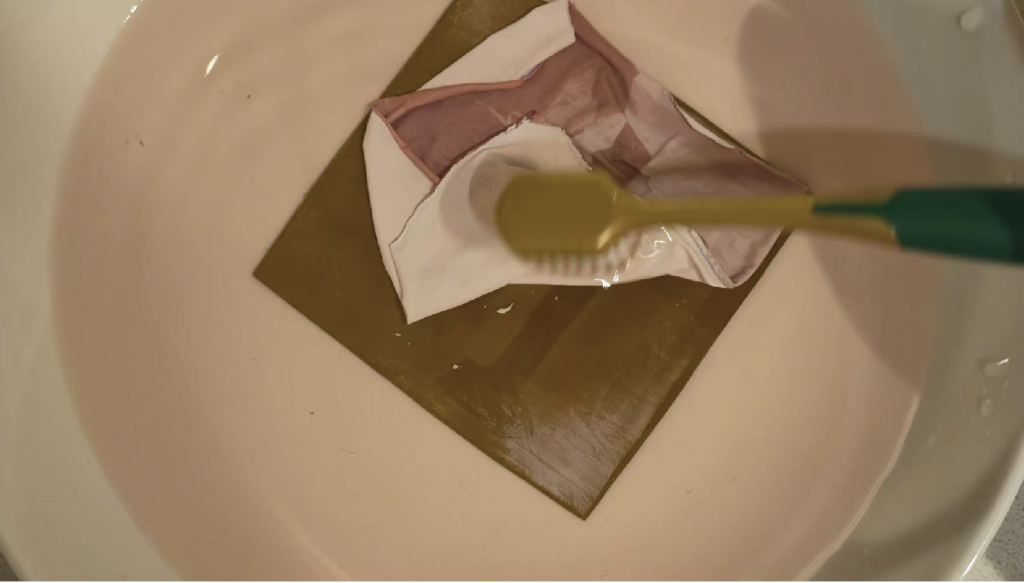
Soak
I placed the photograph in warm water and waited for the image layer to loosen. I then used a brush to gently separate it.
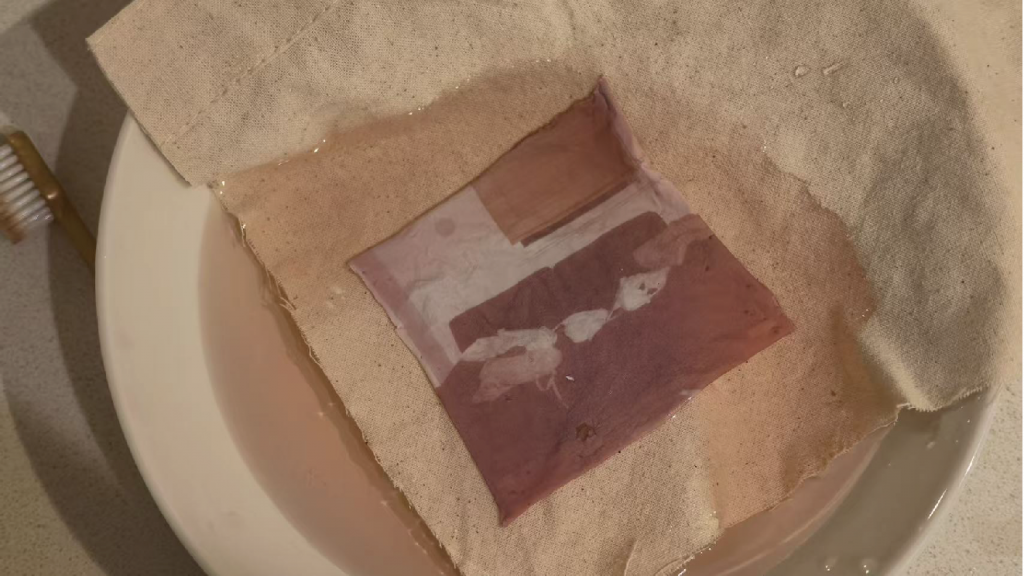
Transfer onto Fabric
I carefully placed the wet image layer onto a piece of fabric. I tried to spread it out gently with a brush, but the thin emulsion was difficult to control.
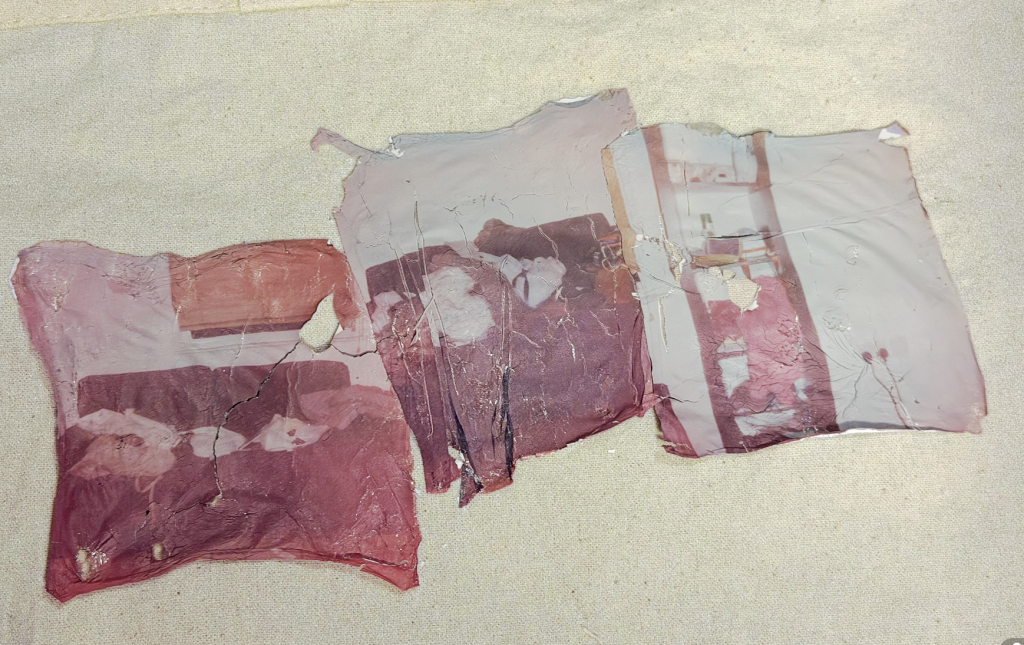
After Drying
After the fabric dried, the image layer became very fragile. The emulsion hadn’t attached properly to the fabric, and it started to crack and break into pieces. I couldn’t keep the transferred image intact.
My first attempt was harder than I expected. The image layer was very fragile and difficult to control. I was also a little worried because I wasn’t sure whether the chemicals were harmful. But at the same time, I felt excited to see the image slowly separate from the Polaroid. Even though the result wasn’t successful, I wanted to keep experimenting.
Second Copy Attempt
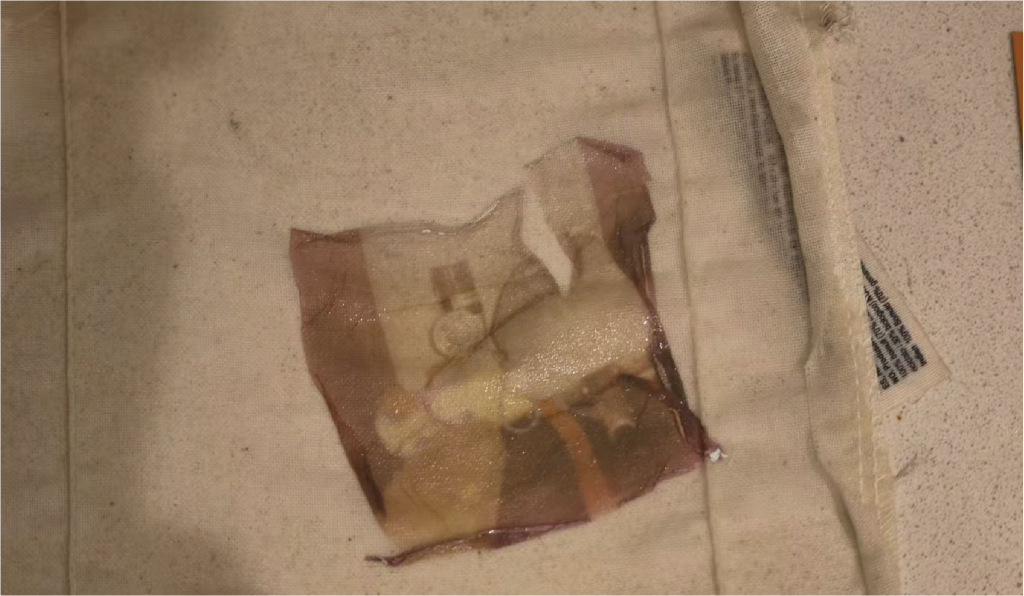
Fabric 2
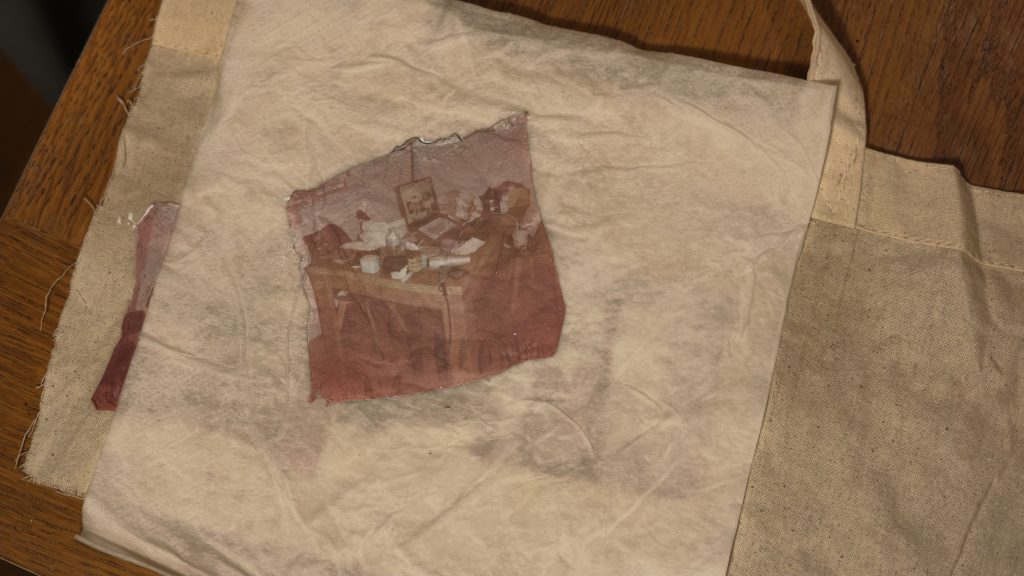
Tissue Paper
– Different Surfaces
I tried transferring the image onto fabric again because the first attempt had cracked after drying. I wanted to see if I could get the emulsion to attach better to the fabric. However, the same problem happened again. After drying, the emulsion started to crack and break apart, and I still couldn’t keep the image intact.
I also tried transferring the image onto tissue paper. Compared with fabric, the thin paper was easier to work with while wet. The image seemed to blend into the paper fibres rather than just sitting on the surface. I found it easier to spread out the emulsion and keep the image together.
Q&A
1. What was unexpected?
I didn’t expect the image to crack after drying. It looked fine when wet, but became very fragile afterwards.
2. What did you understand differently?
I realised that a Polaroid is not just a photograph. Its image layer is thin, delicate and easily damaged.
3. What was the biggest challenge?
Peeling off the plastic layer without damaging the image, and keeping the emulsion flat when transferring it onto fabric.
4. What did you learn from this medium?
Successfully transferring an image doesn’t mean it will stay intact. The surface and drying process also affect the result.
5. How does it relate to graphic communication design?
I realised that materials can change how an image looks. Wrinkles, cracks and missing details can become part of its visual language.
Conclusion
In my first experiment, I managed to separate the image layer from the Polaroid, but transferring it onto fabric was difficult. The emulsion cracked after drying, which I hadn’t expected.
This connects to Barbara Bolt’s The Magic is in the Handling (2019), which explores how knowledge develops through working directly with materials. I only understood how fragile the emulsion was when I actually tried to transfer it.
Even though I followed the same method, I couldn’t control the final result. This made me question whether copying a process could ever produce the same outcome.
Leave a Reply